How many students use Financial Aid, and how much do they use?
Bucknell University 2816th for the average student loan amount.
Secrets to getting the best Pennsylvania scholarships and financial aid
Effective as of 2010-09-21
Student Enrollment Demographics
How many students are enrolled at Bucknell University?
Student Graduation Demographics
How many students graduated at Bucknell University?
Most Popular Fields of Study
The top 5 fields of study completed at Bucknell University.
Demographics – Main Campus and Surrounding Areas
Reported area around or near Lewisburg, PA 17837
Surrounding community
Distant town (between 10 to 35 mi. away from an urban cluster)
There aren't any videos for this school. Be the first to share your video to thousands of people!
Bucknell University
Introduction
Located along the banks of the Susquehanna River in central Pennsylvania, Bucknell
is just a few hours’ drive from some of the liveliest urban centers in the country:
Washington, DC; Baltimore; Philadelphia; Pittsburgh; New York City. But chances are you
won’t miss the hubbub of the big city once you arrive on campus. While Bucknell has earned
a national reputation as a leader in academics, athletics, social responsibility, extracurricular
activities, and student engagement, ask a student or alum what it was that drew them to the university, and they’ll probably tell you that, first and foremost, it was the beautiful,
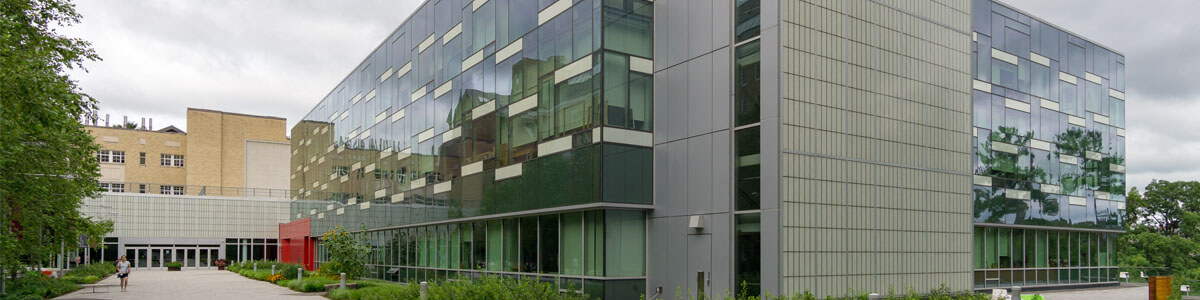
pristine campus that attracted them to Bucknell. Set on 450-acres that adjoin the quaint
town of Lewisburg, Bucknell’s buildings are a combination of historic gems and new, stateof-
the-art facilities.
Since its founding in 1846, Bucknell has been recognized as an elite private liberal
arts college. Originally dubbed the University at Lewisburg, the school was renamed for
William Bucknell, a charter member of its Board of Trustees, in 1886. The university was an
early advocate for admission of women and minorities: the first female graduated from
Bucknell in 1885, the first African-American in 1875, and the first international student in
1864. Offering over fifty majors and sixty minors in its two colleges—the College of Arts and
Sciences and the College of Engineering—Bucknell has established itself as a place of academic
rigor and social variety.
Bucknell students take their academic improvement very seriously. The university is
in the top four percent of the most selective colleges in the nation. All students are
required to take a foundation seminar class in their first semester on campus; many also
opt to join a residential college, a theme-based living and learning environment that combines
classroom and co-curricular activities. Students also take a capstone course, either
within their majors or across multiple disciplines, during their senior year. Bucknell student-
athletes rank in the top five in the nation in graduation rates over a four-year period.
In addition, the university offers a number of options for students to pursue independent
research projects, scholarly studies, and coauthoring of papers for scholarly journals
and conferences. Bucknell professors are committed to excellence in both teaching
and research. Ninety-seven percent of full-time faculty members (ninety-two percent of all
faculty) hold a Ph.D. or equivalent degree, and the student-faculty ratio is 11-1. The school’s
academic program is based in the liberal arts and works to equip students with critical thinking,
independent analysis, and problem-solving skills.
But while the primary goal of the university, and of any other higher education institution,
is to provide a firm academic foundation for its students, Bucknell is unique in its ability to do so in a social environment that has so much to offer. Bucknell blends its rich
heritage and competitive academics with a vibrant Greek life, a wide range of varsity and
intramural sports, and numerous clubs and activities (and if you don’t find something you
like, no problem—just create a new one). A Bucknell student is likely to be involved in an
assortment of activities at any given time, from Ultimate Frisbee to comedy improv, from
the Culture Couture fashion club to the BU jazz band, from the Japan Society to the Debate
Team. The university provides all this in a community-oriented, collegial environment
where individual goals and achievements blend with school spirit and common support.
Five years after graduating from Bucknell, I can still recall many of the
lectures I sat through, the sporting events I attended, the conversations I had
with professors and friends. This, to me, is what Bucknell is all about—providing
a foundation that is solid and rich, with the liveliness and excitement to last
a lifetime. While Bucknell’s academic reputation is constantly increasing, it is
the combination of so many different opportunities at the university that makes
it the ideal match for the student who wants to try it all, in a place where he/she
is provided with every chance to succeed.
There are many colleges and universities in the United States that provide a solid
academic foundation, an array of activities and social organizations, a chance to study
abroad, and an array of services and networking after graduation. However, Bucknell graduates
overwhelmingly agree that their school excels at all these things and more, in a spirited,
social, engaged environment that allows students to connect to each other, to their
professors, to their community, and to themselves.
Bucknell is a school suited to students who want a small, intimate campus that fosters
a sense of community and school pride. While there are none of the perks associated
with big-city colleges, students can enjoy the charms of a small town. The movie theater is
on the historical register, one of the few art deco theaters in the country that are still in
operation. There is a Victorian parade the first weekend in December and the annual Arts
Festival in April. The university does an excellent job of providing cultural, educational,
political, and literary events and speakers that allow students to broaden their perspectives
and capitalize on their academic opportunities. Students at Bucknell are rewarded when
they are motivated, active, and ambitious—and most Bucknell students are all these
things. They come from different backgrounds and have many different goals for success,
but their shared experience during their four years at Bucknell unites them in ways that
are at once evident and unexplainable.
In the end, Bucknell is a school that provides its students with a rewarding, engaging
all-around education. Bucknell students and graduates are among the most accomplished,
thoughtful, dedicated, hard-working, and successful in the country. And, most of
them will agree, they are also among the luckiest.
This site is not sponsored by, affiliated with, nor endorsed by Bucknell University
Bucknell University
Academics
Bucknell offers more than fifty majors and sixty minors in its two schools, the College
of Arts and Sciences and the College of Engineering. All students must complete a
Foundation Seminar in their first semester on campus; other requirements include four
courses in the humanities, three in natural science or mathematics, two social science
courses, one course in natural and fabricated worlds, one in human diversity, and a capstone
seminar or experience during senior year. This may sound a bit abstract and extensive,
but the university offers such interesting, multilayered courses (many of which fulfill
more than one requirement), following the required course of study still leaves students
with plenty of time to complete major and minor requirements, and even allows students
to pursue classes that they find compelling outside of their majors. In addition to the
requirements listed, Bucknell also calls for students to have a minimum writing competency
for graduation. Popular programs of study include biology, management, and mechanical
engineering.
My courses at Bucknell, whether requirements or fun options, were
always thought-provoking, engaging, and interesting. I overwhelmingly liked
and respected my professors, and felt that I was constantly being presented with
new and incisive ways of looking at the material being studied. Oftentimes, the
information that we discussed in an English class was also being studied in one
of my history or French classes, and in each instance the conversations were
both reinforcing and uniquely perceptive.
I can still go to museums and remember terms and techniques discussed in
the one art history course I took sophomore year. My interests were in the
humanities, and yet I had the opportunity to be a teaching assistant for introductory
biology. From my foundation seminar to my capstone course, I always
felt that I was getting my money’s worth from a Bucknell education.
Bucknell’s engineering program is highly acclaimed, which is especially notable for
a school whose main focus is in the liberal arts. Engineering students are required to complete
the Exploring Engineering course in their first semester. A total of thirty-two courses
and a minimum GPA of 2.0 are required for engineering students to graduate. The university’s
management program is also noteworthy. As part of a hands-on, practical approach to learning, the management and engineering departments
offer a summer program called the Institute
for Leadership in Technology and Management
(ILTM), in which students attend workshops by faculty
and corporate leaders, travel to industrial and
business sites, and work with companies on realworld
management and technological projects.
Special academic programs at Bucknell include a Washington semester, internships,
study abroad, a five-year dual engineering/arts degree, and student-designed majors. There
are twenty-three national honor societies on campus, including Phi Beta Kappa, and fiftyfive
departmental honors programs. Students can also design their own majors and minors,
provided they receive departmental and university approval.
Faculty
Bucknell’s faculty members represent some of
the brightest, most forward-thinking individuals
in their fields. Ninety-two percent of faculty at
the university hold a Ph.D. or terminal degree.
Faculty members are regularly published in academic
journals, make presentations at professional
meetings worldwide, and receive prestigious
research grants and awards. The student-faculty
ratio is 11-1, and faculty members are known to go out of their way to offer one-on-one assistance
to students.
In my four years at Bucknell, I was privileged to learn from and work
with a number of devoted and energetic faculty members, in a rich variety of
fields. I always felt I had sufficient access to professors outside of the classroom,
and was able to discuss concepts at length in an open, collaborative environment
with them. I had several classes with fewer than ten students in them, and felt
very much a part of the academic process at the university.
Popular Majors
Economics
Business Administration
English
Biology
Psychology
Management
Mechanical Engineering
Unique Academic Programs
Common Learning Agenda
Seminar for Younger Poets
Philip Roth Writer-in-Residence Program
Stadler Semester (for Poetry)
Poet-in-Residence Program
Institute for Leadership in Management
and Technology
Presidential Scholars Program
Undergraduate Summer Research Program
Academic Resources
Though its campus is small, Bucknell offers a number of state-of-the-art resources to
contribute to students’ academic growth. The Ellen Clarke Bertrand Library houses
over 800,000 total volumes, including books, magazines, periodicals, CDs, DVDs, and microform
items, among others. There is a learning resource center, and computerized library
services include interlibrary loan, database searching, Internet access, and laptop Internet
portals. It also includes a Special Collections and University Archive section. Nearly all of
the campus has wireless capability with the exception of only a few outdoor areas.
Bucknell has a renowned art gallery, radio station,
observatory, primate center, greenhouse, performing
arts center, writing center, photography lab,
and engineering structural test lab. Its poetry center,
the Stadler Center for Poetry, recently celebrated
its twentieth anniversary and is one of only a
few poetry centers in the United States.
Study Abroad
Bucknell ranks in the top twenty among bachelor’s
institutions nationwide in the number of
students studying abroad, with about 300 juniors and
first-semester seniors studying in another country each year (more than forty-five percent
of eligible students). Students travel to more than sixty countries and focus on a variety of
study programs. Bucknell-run programs include Bucknell en France (in Tours, France),
Bucknell in London, Bucknell en España (in Granada), and Bucknell in Barbados (near the
capital city of Bridgetown). The university also has summer programs in a variety of locations,
such as Northern Ireland, Barbados, and the U.S. Virgin Islands.
Bucknell also offers students the opportunity to volunteer in Nicaragua through its
popular program called the Bucknell Brigade. Founded in 1999 to provide emergency relief
following Hurricane Mitch, the Brigade travels each year to Nueva Vida, a facility built from
Brigade donations outside of Managua. During their trip, students and staff work together
to provide residents with medicine and supplies, and to assist with manual labor projects,
while learning about micro-enterprise initiatives, grassroots development, and the history
and culture of Nicaragua. While not a program of study abroad, the Brigade has become a popular way for students to spend Spring Break, and is most certainly a learning experience
for those who participate.
Special Facilities
Outdoor Natural Area
Primate Facility
Uptown (Alcohol-Free Night Club)
7th Street Café (Coffee Shop)
Tustin Theater
18-Hole Golf Course
Photography Lab
Race & Gender Resource Center
Multimedia Lab
Conference Center
Craft Center
Herbarium
Engineering Structural Test Lab
Greening the Campus
Bucknell students and leaders are very dedicated to making the campus more environmentally
efficient. The university has implemented a Campus Greening Initiative to
promote sustainability and environmental literacy among all members of the university
community. The Initiative provides curricular and extracurricular programs using the campus
as a learning environment and aims to transform the university’s green footprint.
A recent assessment project implemented by the Greening Initiative provided a thorough
understanding of the strengths and accomplishments of the program thus far, as well
as a blueprint for future improvement. The university’s power plant, which provides ninetyfive
percent of Bucknell’s power, converted from coal power to natural gas more than ten
years ago. While the school has undertaken a number of new construction projects and renovations
over the last several years, its energy use has remained relatively consistent,
reflecting the move to more efficient practices.
While there still remain weak spots in terms of greening the campus, Bucknell is dedicated
to continuing to look for new ways to promote sustainability and provide real-world examples
of environmental responsibility for students to take with them after they leave campus.
This site is not sponsored by, affiliated with, nor endorsed by Bucknell University
Most Popular Fields of Study
The top 5 fields of study completed at Bucknell University.
Financial Aid
In a recent issue, SmartMoney magazine ranked Bucknell as the fifth best long-term
value among liberal arts colleges and universities, in terms of “return on tuition.”
Kiplinger’s Personal Finance also recently ranked Bucknell in the top fifty nationally in
terms of best value for private colleges. That said, the university recognizes that quality
education has become increasingly difficult to afford for many families. Bucknell has a
wide-ranging financial aid program to help students cover the costs of their education. The
university offers eligible students a number of financing options, including scholarships,
loans, grants, and on-campus employment opportunities.
In 2007–2008, sixty-two percent of full-time
freshmen and sixty-four percent of continuing fulltime
students received financial aid. The average
financial aid package for Bucknell freshmen in
2007–2008 was over $25,000.
Over one-third of Bucknell students work parttime
while on campus. Through the Federal Work-
Study program, students can find jobs on campus and
work eight to ten hours per week while classes are in
session. There are also jobs available for students
who do not participate in the Federal Work-Study
program.
Additional information and specific financial
aid package options are available at the university’s
Financial Aid Office’s Web site.
This site is not sponsored by, affiliated with, nor endorsed by Bucknell University
Student Financial Aid Details
How many students use Financial Aid, and how much do they use?
Bucknell University 2816th for the average student loan amount.
Secrets to getting the best Pennsylvania scholarships and financial aid
Effective as of 2010-09-21
Bucknell University
Students
Bucknell’s distance from major metropolitan areas and the insular nature of its campus
would seem to indicate that finding things to do outside of the classroom is somewhat
difficult. However, the university provides a wide variety of opportunities for students to
participate in clubs, activities, athletics, and volunteer organizations. The Bucknell
student’s social life is truly self-determined, and can be just as full and rewarding as those
of students at big-city schools.
There are more than 150 clubs and organizations on campus at Bucknell, including
music groups, varsity and club sports, performing arts organizations, ethnic groups, gay and
lesbian clubs, honor societies, political associations, service groups, a student-run newspaper,
and religious clubs, among others. New groups are constantly being created, and dormant
ones brought to life again. Bucknell students are very active in volunteer
organizations—eighty-five percent of seniors participate in some form of community service.
Bucknell also hosts a number of outside performance groups and speakers throughout
the year. The 1,200-seat Weis Center for the Performing Arts regularly holds theater,
music, and dance events, as well as political and social lectures and commentaries from
some of the world’s leading authorities in their fields. The Bucknell Forum series has featured
such prominent speakers as Jim Kramer, Doris Kearns Goodwin, F.W. deKlerk, and
Tim Russert. The Janet Weis Fellow in Contemporary Letters award brings noted authors to
campus each year, including past winners Toni Morrison, John Updike, Salman Rushdie,
Tom Wolfe, Joyce Carol Oates, Derek Walcott, and David McCullough.
Other popular activities on campus include the Chrysalis Ball, the student-initiated
gala festivities each spring; the Christmas Candlelight service, the Emmy-nominated holiday
event featuring the Rooke Chapel Choir and the Rooke Chapel Ringers; readings from
world-renowned poets at the Stadler Poetry Center; rotating exhibits at the Samek Art
Gallery; and annual student productions of theater and dance shows.
Fraternities and Sororities
Bucknell has a highly active Greek life. There are eleven national fraternities on campus,
drawing fifty-four percent of eligible men, and six national sororities, drawing
fifty-three percent of eligible women. Fraternity and sorority rush occurs first semester of
a student’s sophomore year. These Greek organizations provide students with the opportunity
to meet new people, develop their leadership skills, and participate in a number of
community service projects.
Most weekends feature a number of fraternity parties and dual fraternity-sorority
social events. However, although fraternity and sorority life is vibrant at Bucknell, students
who choose not to go Greek are at no disadvantage when it comes to their social lives. They
can still attend Greek-sponsored events and participate in a variety of fraternity and sorority
functions.
This site is not sponsored by, affiliated with, nor endorsed by Bucknell University
Student Enrollment Demographics
How many students are enrolled at Bucknell University?
Student Graduation Demographics
How many students graduated at Bucknell University?
Athletics
Bucknell has thirteen varsity sports for men and fourteen for women, along with eighteen
intramural sports for men and twenty-one for women. Bucknell is a member of the
Division I Patriot League, and has won the Patriot League President’s Cup, the league’s allsports
trophy, in fourteen of the last eighteen years. Rival schools include Colgate, Holy
Cross, Lehigh, Lafayette, and American. Bucknell ranks among the top schools in the
nation in student-athlete graduation rates, according to recent NCAA surveys. In addition,
Bucknell ranks third nationally in terms of the number of student-athletes named to
national Academic All-America teams.
Bucknell’s athletic facilities are state-of-the-art for a university of its size. The campus
boasts an athletics and recreation center with an Olympic-size pool, a 16,000-squarefoot
fitness center, a 4,000-seat basketball arena, a 13,000-seat stadium, hockey and
lacrosse fields, baseball fields, and recreational fields for soccer, softball, and other activities,
as well as tennis courts, a dance studio, climbing walls, and an 18-hole golf course.
Bucknell provided me with the rare opportunity to compete in Division
I collegiate baseball while acquiring a first-rate degree. While my postgraduate
path and that of many of my teammates has not included baseball, some have
had the opportunity to play professionally. I believe those who participate in
athletics at Bucknell embody the true meaning of the student-athlete.
More than seventy percent of Bucknell students played varsity sports in high school,
and many choose to take advantage of the university’s extensive intramural and club sports
program. Students can join men’s, women’s, or co-recreational teams, including basketball,
golf, volleyball, squash, softball, bowling, and tennis, to name a few. There are also twenty
club sports for students who want to participate in the competitive team atmosphere of athletics
without the commitment of a varsity sports program.
This site is not sponsored by, affiliated with, nor endorsed by Bucknell University
Alumni
Bucknell graduates are some of the most driven and successful in the nation.
According to an August 2008 report in The Wall Street Journal, Bucknell ranked first
among liberal arts schools in terms of the mid-career salary rates of its graduates. (The
study was performed by PayScale Inc., an online compensation provider.) Bucknell graduates
also rank in the top twenty nationwide for the number of graduates who go on to earn
doctorates.
Eighty-nine percent of Bucknellians graduate within five years, which is among the
highest rates in the country. Within six months of graduation, more than twenty-five percent
of students are typically enrolled in graduate school, and almost seventy percent had
found employment. The school hosts a number of career and graduate school fairs throughout
the academic year, where students can meet and network with alumni and company
representatives from a variety of industries, an occasion that often leads to internship and
career opportunities.
Prominent Graduates
Kunitake Ando ’65, former
president, SONY Corporation
Robert Andrews ’69, congressman
Susan J. Crawford ’69, former
chief judge, U.S. Court of Military
Appeals
Jane Elfers ’83, former president
and CEO, Lord and Taylor
Edward Hermann ’65, actor
Bruce Lundvall ’57, president,
Blue Note Records
Leslie Moonves ’71, president
and CEO, CBS Corporation
Philip Roth ’75, author
David Scadden ’75, co-director
of Harvard University’s Stem Cell
Institute
Bucknell’s Career Development Center is dedicated to providing students with an
array of services, and can be extremely helpful to students in finding internships and jobs
after graduation, as well as continuing career advice and assistance to alumni. The Center’s
services include career counseling, assessment testing, employment and networking fairs,
internships and externships, job shadowing, resume assistance, interview preparation, and
graduate and professional school information.
This site is not sponsored by, affiliated with, nor endorsed by Bucknell University
Feel free to add comments or additional information regarding Bucknell University, or discuss this school in the University Discussion Forum
about 3 years agoV Bergman ssbberg ((at)) comcast dot net
I am a 1984 graduate from Bucknell and I feel that I received or rather took advantage of the excellent education offered at this institution. Located in a truly beautiful setting within driving distance of several metropolitan areas, Bucknell offers personal attention and a truly dedicated and accomplished faculty. I was able to explore many different disciplines before choosing the major which was right for me. I came from a rural background and was the first in my family to go onto college following high school. I was able to pursue very gainful employment and have never had difficulty find challenging work environments dispite moving to several other states in the past 20 years. My experience at Bucknell made me the lover of quality education that I am and encouraged me to succeed. 'Ray Bucknell!
almost 5 years agopeter ogden bibliolux ((at)) yahoo dot com
Great school, great town, great teachers, great food.
I graduated from BU in 1980 with BA Liberal Arts specializing in art. My family paid full tuition.
I feel that BU should require all liberal arts students to learn a pactical marketable trade such as plumbing or carpentry to fall back on in hard times.
Many BU students are lucky in being well connected for jobs.
My formerly affluent family is gone. Since leaving BU I have been homless twice, have been unable to find a job other than security guard or taxi driver. this is partly due to living in a city with a very weak economy.
I applied for 16 jobs this year and never even got an interview. I now survive on $710 SSI per month, live in a HUD apt. bldg in the inner city and have not been able to afford a car for almost 5 years. In addition I completed course work at Middlebury College and graduated from one of the most expensive and prestigious prep boarding schools in the U.S.
Moral: Graduating from a fancy school is no guarantee of success. Learn something practical and saleable in the job market. Learn to network. I am going back to school to learn a trade and hopefully rise up out of poverty.---The rich don't always get richer.
This website and associated pages are not associated with, endorsed by, or sponsored by Bucknell University. StateUniversity.com has no official or unofficial affiliation with Bucknell University.
ssbberg ((at)) comcast dot net
I am a 1984 graduate from Bucknell and I feel that I received or rather took advantage of the excellent education offered at this institution. Located in a truly beautiful setting within driving distance of several metropolitan areas, Bucknell offers personal attention and a truly dedicated and accomplished faculty. I was able to explore many different disciplines before choosing the major which was right for me. I came from a rural background and was the first in my family to go onto college following high school. I was able to pursue very gainful employment and have never had difficulty find challenging work environments dispite moving to several other states in the past 20 years. My experience at Bucknell made me the lover of quality education that I am and encouraged me to succeed. 'Ray Bucknell!